Thursday, January 12, 2012

Thursday, 1/12 Homework

  • ELA
    • Spelling contract is due/study for test - remember all in cursive!
    • Re-read story for comprehension test prep and review questions from class
  • Math:  everyone has a multidigit multiplication worksheet according to his/her specific mastered/practicing skill level.  Unless it is 3x1 digit problems, no one is to do more than 15 problems unless parents want it.  20 minutes is the amount of time I would like the kids to spend on it.  :)
  • Science:  study fossils vocabulary.  The kids will complete their Fossils study guide for Test on Wednesday (not Tuesday - I forgot about MLK!!) and the study guide tomorrow for morning work (no need to print it out) but we will start learning about Eleanor Roosevelt on Tuesday.
Vocab:

fossil                           is something that has lasted from a living thing that died long ago

mold                           is the shape of a plant or animal left in sediments when the rock formed

imprints                      are molds of leaves or other thin objects (an imprint is a lot like a stamp)


cast                             forms when mud or minerals fill a mold and hardens


decay                          to rot or decompose


extinct                        when a plant or animal is no longer living on earth


sedimentary
rocks                                 layers of materials that   
                                         are squeezed together  
                                         and turn into rock

petrified                           when wood turns to  
                                         stone

paleontologists                  a person who studies fossils


Fossils of Georgia
By Travis Eby, eHow Contributor
The bones of ancient animals can be fascinating and mysterious. Fossils appear all over the world. Many of the fossils in Georgia are found along the Coastal Plain Province.
1.   Shark Teeth
Shark teeth are common fossils in Georgia and are the official state fossil. From the Cretaceous to the Miocene periods (approximately 10 to 70 million years ago) sharks hunted and stalked the coastal areas of Georgia. It is very rare to find a fossil of an actual carcass of these prehistoric sharks, but their teeth are found in sizable numbers due to the fact that sharks constantly lose and replace their teeth.
2.   Invertebrate
o    An abundance of invertebrate marine fossils appear along the coastal plain of Georgia. The most common of these are bivalved mollusks, a shelled marine animal. Another invertebrate fossil of Georgia is the sponge. They first emerged in the Precambrian period (over 500 million years ago), and are animals that feed through tiny holes in their bodies that absorb water and food. Some invertebrate fossils appear similar to modern invertebrate animals.
Whales
o    Whale fossils of Georgia are quite famous, and represent early whales of the Eocene Epoch (54.8 to 33.7 million years ago). These fossils represent a key period of evolution for whales. The fossils have shown that these whales had only partly adapted for underwater hearing and had serrated teeth and vestigial hind limbs. Recently, an almost complete skeleton of an even more primitive whale was discovered in Burke County.
Dinosaurs
o    Three main dinosaurs have been identified within the fossils of Georgia. These include a smaller relative of the tyrannosaur, an ostrich-like animal and duck-billed dinosaurs. Since Georgia was mostly covered in water in the ancient past, many large animal fossils are actually ocean creatures. A common dinosaur fossil of Georgia is the giant crocodile, which reached a length of 9 meters and could weigh as much as 2.8 tons.

HOW FOSSILS FORM

Fossils of hard mineral parts (like bones and teeth) were formed as follows:
  • Some animals were quickly buried after their death (by sinking in mud, being buried in a sand storm, etc.).
  • Over time, more and more sediment covered the remains.
  • The parts of the animals that didn't rot (usually the harder parts likes bones and teeth) were encased in the newly-formed sediment.
  • In the right circumstances (no scavengers, quick burial, not much weathering), parts of the animal turned into fossils over time.
  • After a long time, the chemicals in the buried animals' bodies underwent a series of changes. As the bone slowly decayed, water infused with minerals seeped into the bone and replaced the chemicals in the bone with rock-like minerals. The process of fossilization involves the dissolving and replacement of the original minerals in the object with other minerals (and/or permineralization, the filling up of spaces in fossils with minerals, and/or recrystallization in which a mineral crystal changes its form).
  • This process results in a heavy, rock-like copy of the original object - a fossil. The fossil has the same shape as the original object, but is chemically more like a rock! Some of the original hydroxy-apatite (a major bone consitiuent) remains, although it is saturated with silica (rock).
Here's a flow chart of fossil formation:


There are six ways that organisms can turn into fossils, including:
  • unaltered preservation (like insects or plant parts trapped in amber, a hardened form of tree sap)
  • permineralization=petrification (in which rock-like minerals seep in slowly and replace the original organic tissues with silica, calcite or pyrite, forming a rock-like fossil - can preserve hard and soft parts - most bone and wood fossils are permineralized)
  • replacement (An organism's hard parts dissolve and are replaced by other minerals, like calcite, silica, pyrite, or iron)
  • carbonization=coalification (in which only the carbon remains in the specimen - other elements, like hydrogen, oxygen, and nitrogen are removed)
  • recrystallization (hard parts either revert to more stable minerals or small crystals turn into larger crystals)
  • authigenic preservation (molds and casts of organisms that have been destroyed or dissolved).
Most animals did not fossilize; they simply decayed and were lost from the fossil record. Paleontologists estimate that only a small percentage of the dinosaur genera that ever lived have been or will be found as fossils.

Most of the dinosaur skeletons that are shown in museums are not actually fossils! Exhibits are often lightweight fiberglass or resin replicas of the original fossils.

Why are Fossils Rock-Colored?
Because they ARE rocks! A fossilized object is just a rocky model of an ancient object. A fossil is composed of different materials than the original object was. During the fossilization process, the original atoms are replaced by new minerals, so a fossil doesn't have the same color (or chemical composition) as the original object. Fossils come in many colors and are made of many different types of minerals, depending on what the surrounding rock matrix was composed of; one dinosaur bone (Minmi) is an opal.
Also, some fossils of skin (and other soft body parts) have been found. Again, the color of the skin is not retained during the fossilization process, all that remains today is a rocky model of the original

Name:  _____________________  Test is WEDNESDAY, Jan. 18th
Science: Fossils:  Study Guide
1.     How can the shape of a tooth tell us what an animal might eat?
_____________________________________________________________________
2.    What does a carnivore eat? What will its teeth look like?
_____________________________________________________________________
3.    What does an herbivore eat?  What will its teeth look like?
_____________________________________________________________________
4.    What does an omnivore eat?  What will its teeth look like?
5.    What is a Trace Fossil?__________________________________________________
6.    How do scientists use fossils?
_____________________________________________________________________________________________________________________________________________________________________________________________________________________
7.    What do fossils tell us?
_______________________________________________________________________
_______________________________________________________________________
_______________________________________________________________________

8.    What do Trace Fossils do?
__________________________________________________________________________________________________________________________________________
9.    How do we know animals have changed over time?
__________________________________________________________________________________________________________________________________________
10. What type of fossil is most common?
_____________________________________________________________________
11.  Dinosaurs are an example of an animal that is now extinct. What does extinct mean?  __________________________________________________________________
12. What are some other examples of extinct animals?  __________________________________________________________________
13. What is a cast?  ______________________________________________________
14. How is a mold made?  __________________________________________________
15. For a fossil to form, what must first happen to the animal?  ______________________
16. A triceratops dinosaur is very similar to what animal today?  _____________________
17. How did scientists figure #15 out?  __________________________________________________________________

And what you all love.....................  the answers  :)

Name:  _______________________________
Science: Fossils  Study Guide
·         Sharp teeth, like shark and alligator teeth belong to animals who eat meat. (carnivores)
·         Rounded teeth, like hippos and horses, belong to plant eating animals. (herbivores)
·         Animals that have rounded and sharp teeth, like humans, eat plants AND animals. (omnivores)
·         Trace fossils are things left behind that are imbedded in the ground, like foot prints.
·         Scientist use fossils to learn about animals that used to live on Earth.
·         Fossils that are found help tell us what USED to be somewhere. Animals that have fins probably once lived where there was a lake, river or ocean.
·         Trace fossils, like footprints, help tell us the size an animal used to be.
·         Scientist know animals change over time because there are animals today that are similar to the ones that used to be around. They compare these two things.
·         Animal fossils are the most common.
·         Dinosaurs are an example of an animal that is now extinct. Extinct means they don’t live any more.
·         Casts are made when something fills up a mold. (i.e. the glue in our fossil making activity)
·         When a fossil forms, this means the living thing it once was, must die.
·         A triceratops dinosaur is very similar to a Rhino today. Scientists compare these two animals to each other to see how times have changed.

Multiplication Drills

Today was hectic but exciting in math.  I was managing 5 different small groups at one time based on 2x1, 3x1, 2x2, 3x2, 4x2 digit multiplication problems.  Once the kids have the hang of it, it's really easy to add more digits.  This will be taught in flexible groups.  Green must know 3x1 digit, pink must know 3x2 digit problems. 

Below is a great free website http://www.math-drills.com/multiplication.shtml  Scroll down to multi-digit problems, then adjust number of digits accordingly for your child's skill level! 

Adjectives Review

Adjectives:

Comparative
-comparing 2 things

Superlative
-comparing more than 2 things

Comparative:  -er or more  (ER)
-1 or 2 syllables: add –er
-more than 2 syllables:  use more  
(there will always be exceptions though)
*always check:  does the word sound weird?
Superlative:  -est or most (ST)
-1 or 2 syllables: add –est
-more than 2 syllables:  use most  
(there will always be exceptions though)
*always check:  does the word sound weird?


Bad and Good…..
You will never be the baddest or the goodest…
Bad:    comp:  worse  super:  worst
Good:  comp:  better super:  best

Articles:  a, an, the
-special type of adjective used to describe nouns based on singular or plural noun, and if the noun has a consonant or vowel sound
a – singular nouns that begin with a consonant sound
an - singular nouns that begin with a vowel sound
the – both singular and plural nouns with both vowel and consonant sounds

Wednesday, January 11, 2012

Be the change! "Caught Doing Good"


This is my goal for the class! 

Caught Doing Good:

December service project was Mimosa fundraiser and books.
January service project - Mimosa books (due by 1/31)

1/13 - Jack and Renee Whelan - Great Pyrenese Rescue
1/20 - open
1/27 - Maddie Bernard and Judy Chen - Atlanta Food Bank 
*The food bank will also be our February service project.  
2/3 - open
2/10 - open
2/17 - no school
2/24 - open

Wednesday 1/11 HW

  • ELA
    • Spelling contract
    • Finish business letter if not completed
  • Math
    • Green:  pg. 144 front
    • Pink:  TAG - pg. 144 front
    • Pink - present today:  doggie multiplication
Thank you Heather McIlhinney for sending in cookies for "excavation" that we will do tomorrow since today was TAG day!

Tomorrow is college spirit day and Friday - wear red and black - I want to win Spirit back!!  :)

Tuesday, January 10, 2012

Cool fossils website

http://www.fossilsforkids.com/ We looked at some of the awesome stuff on here today!  If you find any other really valuable websites for the kids, please share them with me and I will post them!

Tuesday, 1/10 HW

  • Spelling contract
  • Math:
    • green:  141 back
    • pink:  21 back and break apart (distributive property) page f/b
We need cookies - some sort to excavate (chocolate chip, raisin, m&m) or just the keebler rainbow ones for a science experiment...  I have a crazy schedule tonight and it's a little bit of torture to buy cookies that I cannot eat ;)

Monday, January 9, 2012

4th grade congrats

Some x-Serafin Superstars, alumni, if you will :) came back to congratulate our class on their efforts and hard work!  They are an inspiration to children and adults alike!  Rock on, class, rock on!

Homework and announcements

Homework:
  • ELA:
    • ALL:  Study Vocab *quiz tomorrow!!
    • Spelling contract (they may finish the morning work today 4x's each in cursive or do a Monday activity)
  • Math:
    • Green:  140 back
    • Pink:  141 back
    • ALL:  study division facts - we took a baseline data point last Thursday - 100 facts in 10 minutes - there will be a weekly timing in division in addition to multiplication due to the need to be fluent in facts for this math unit.  
Science Standards:
Standards:
S3E2. Students will investigate fossils as evidence of organisms that lived long ago.
a. Investigate fossils by observing authentic fossils or models of fossils or view information resources about fossils as evidence of organisms that lived long ago.
b. Describe how a fossil is formed.                              
EQ:
What can we learn from fossils?
How are fossils formed?
What story can fossils tell?

Unit is 6 days - we will next Tuesday!


Young Author's Competition letter and entry form, third grade newsletter, and new Friday celebration instead of parent reader were also emailed out today.  Below is the Friday change:

Inspiration:   I can talk until I'm blue about volunteering and serving, but until the kids are doing it and we're celebrating it, we're not going to see too much change.  Sooooo....  we are starting to celebrate on Fridays during, "Caught Doing Good"  that highlights the various efforts and service projects that the kids are participating in around town! 

From the email: 
I wanted to share with an amendment that I am making to the Friday Parent Reader program.  We will still invite parents to share in the classroom on Friday afternoons, but it will be more focused.  Instead, it will be called “Caught Doing Good” and serve to spotlight children and their parents as they are doing good in the community, neighborhood, etc. This will provide us with an avenue to celebrate the service that we are providing to the community and inspire and encourage others to reach out. 


If you have previously signed up, my apologies for the change.  Mrs. Whelan and Jack will be our first speaker and share their work with Great Pyrenees Rescue of Atlanta.  The scheduling will be amended on volunteer spot.  This is not a platform to share political opinions, religions, or anything else-it is a time to share and celebrate participation in caring for and volunteering in the community.  J 

Report cards will go home on Wednesday.

Friday, January 6, 2012

Weekend homework

Green group:  Practice division facts!  We took an oath to practice today so we can rock next week!

Pink group math parents, please ask your children to amaze you with problems like 48,000,000 ÷ 600,000!   We are working with challenge problems that include zeros in both the dividend and divisor. 

This week has been such a blessing to reunite with the children and take our time with the introduction of our new units.  I have greatly enjoyed this time!  Have a wonderful weekend!

Love my gals from last year! My sweet Pal Jessie and Sandy who are in 4th grade now!

Reflecting on y'all's support and generosity.  Pretty awesome and super encouraging!

Date changes

Thank you Judy Chen for pointing out that I scheduled the SAMS unit test on a Sunday...  :) The final test is tentatively Tuesday, Feb. 7th!

Also, due to systematic glitches within the Fulton County district and eSchools+, report cards will be sent home on Wednesday, not Monday as previously mentioned.  As you know, you have full access to your child's grades online on the Home Access Center at any time.

Thursday, January 5, 2012

Math unit standards

I have heard positive feedback from yall about posting the essential questions and unit length, so here is unit 5 for math: 
Math Unit 5: Multiplication and Division of Greater Numbers (25 days)
Essential Questions
Why is it important to know basic multiplication facts?
How do you multiply using partial products?
How do you illustrate the distributive property of multiplication using an array?
What are the multiples of ten?
What strategy can be used when multiplying by 10?
What happens when any number is multiplied by 1? by 0? by 10 or a multiple of 10?
Why are estimation skills important? 
When would using mental math skills be useful? 
How can you use multiplication to solve a word problem? 
ADVANCED EQ:
What does the remainder mean in various division problems?
How are multiplication and subtraction related to division? 
What strategy can be used when dividing 2 and 3 digit numbers by a 1 digit divisor?
When do you use division in real life?
How can you use mental math to solve a division problem?

Multiplication Part 1 test tentatively will be on 1/13, but will be moved to 1/17 (after MLK) if necessary.  I would really like to finish up prior to the long weekend.  Our class is ahead of the game since we have been testing our facts since August!!! YAY! :)


February 5th is our anticipated SAMS unit test date.

1/5 Homework

Welcome back!  Today was a great day renewing expectations and embarking upon new learning journeys as mature, second semester third graders.  Wahoooo!!! 

Thank you for sharing the Johns Creek Herald article - so cool and so awesome for the kids to be recognized for serving others!!

Today your child received the spelling and vocabulary - spelling contract will begin on Monday.  The vocabulary quiz will be Tuesday of next week.  Please begin studying this week.

Today I also spent a sizable amount of time discussing the....drum roll... Georgia Young Author's Competition.  I strongly encourage my students to participate.  Below are the expectations and guidelines.  All entries are due on Thursday, Feb. 16th! That is 6 weeks for your child to produce a masterpiece without the help of me or any parents, siblings, etc. 

January 10, 2012


Dear Parents,

It is time for the Young Georgia Author’s Writing Competition.   This is an annual event sponsored by the Georgia Department of Education.  Its purpose is to inspire the best writing among Georgia students. You will find the 2011-2012 General Rules below this letter and an entry form attached. 

The competition is for all students grades K – 12 in Georgia public schools and participation is voluntary.  Any type of student writing is permissible.  Entries may be short stories, poetry, essays, journals, personal narratives, reports, or any other original student writing.  There is no topic or theme specified.  Students may write on the topic of their choice.  All writing entries become the property of the Georgia Department of Education.  Please keep a copy for your records.  No booklets, bound copies, or illustrations will be accepted.

Entries are first judged at the school level.  One entry per grade level will be chosen.  Then, our winning entries will be sent to the county level for judging.  The county level winning entries will then be sent to the state competition. 

Please carefully read through the rules for the competition on the back of this letter.  They must be followed “to the letter” or an entry may be disqualified.  Please note:
  • Each writing entry must be completely prepared by the student.
  • Parents may not help with writing, editing or typing.   
  • Parents need to fill out and sign the entry form and attach it to their child’s entry.  
  • The student’s name must be on the entry form only, not the writing entry.  
  • The entry must be turned in to your child’s teacher by Thursday, February 16.

If you have any questions regarding the competition, please call me at 770-623-2980 ext. 134 or contact me via email at doyle@fulton.k12.ga.us.

Thank you for your consideration of this great opportunity!


Debbie Doyle
Curriculum Support Teacher


10215 Medlock Bridge Parkway
   Johns Creek, GA  30022   phone 770-623-2980   fax 770-623-2988

YOUNG GEORGIA AUTHORS WRITING COMPETITION
2011 – 2012

GENERAL RULES

DUE DATE:  Thursday, February 16

1.        This writing competition is sponsored by the Georgia Department of Education. 

2.       All entries submitted must be the student’s original work (no parent or teacher involvement).  The writing entry should be either typed or neatly written on 8 ½ x 11 inch paper.  Exceptions to paper size are allowed for kindergarten and first grade entries.  Students should write on one side of the paper only.  Writing entries are limited to five pages. If typed, entries must be double-spaced with a minimum of a 12 point font.  Dictated stories will not be accepted.

3.    Each original student writing entry must be accompanied by an Official Entry Form signed by the student, and the parent/guardian.  The teacher and local school writing co-coordinator signatures will be added when the writing entry is turned in to the teacher.
     
4.      DO NOT WRITE THE STUDENT’S NAME ON THE ENTRY.  There should not be any information on the student’s original writing entry or on the copy which could identify the student, the school, or the system.

5.      Writing entries chosen to represent the school at the county level competition will not be returned.  Please make copies prior to submitting student work.  Do not bind writing entry or include covers.

6.      All entries are due to your child’s teacher no later than Thursday, February 16 with completed entry form to be considered for the school level competition.

7.      All entries must be the original work of the student. All edits and revisions must be performed by the student.  (No one should modify, alter, or influence the student’s writing.) Parent(s)/Guardian(s) and teacher must sign the entry form certifying that the entry is the original work of the student and no support has been provided.

8.      If you would like to see a copy of the complete Young Georgia Authors Competition booklet of information, go to http://www.gadoe.org/.  From Site index by subject scroll all the way down to Young Georgia Authors Competition. Then scroll to 2010-2011 Official Rules Booklet.  Do not send your child’s entry to the Georgia Dept. of Education address as indicated on the bottom of the entry form.  That information is for the school system to send system level winners.  All entries must start at the school level competition.

This will be attached to the January newsletter as well as the entry form which must be completed and signed.  Participants will earn a "No homework pass" and earn the privilege to share their work in author's chair after all entries are turned in.  I am super excited about this!!  (I like it so much I always volunteer to judge, although I will not be judging third grade!)

Pink Spelling/Vocab

The Emperor and the Kite

Spelling Words                 

families
worried
ugliest
funnier
happily
easily
heavier
earlier
tiniest
supplied
luckily
relied
activities
countries
enemies
scurried
libraries
prettier
readily
carried


Vocabulary Words

plotting – planning in secret to do something, often something evil

loyal – constant and faithful to people or ideals

neglected – failed to car for or attend to

insignificant – lacking in important, meaning, size, or worth

encircling – forming a circle around; surrounding

unyielding – constant and never-ending; not giving way

steely – like steel, as in strength, hardness, or coldness

twined – twisted around


Green group spelling/Vocab:

Cocoa Ice
Week 1

Spelling Words

faster
wisest
bigger
slowest
cooler
hottest
soonest
shorter
kindest
louder
slimmer
wildest
tamer
whitest
strangest


Vocabulary Words
harvest:  to gather a crop

pulp: the soft part of certain fruits and vegetables 

machete:  a heavy knife used as a tool for cutting plants

trading:  used for the purpose of exchanging one thing for another

schooner:  a ship that has two or more masts with sails in the front and back

support: to hold the weight of

bargain: to talk about a trade in order to get a better deal

HOTS:

We also have a continued focus on higher order thinking skills.  Both groups essential questions in reading are based in HOTS this week! 

How have you
used your
H.O.T.S. today???
§ Compare/Contrast
§ Analyze
§ Interpret
§ Make judgments
§ Draw conclusions
§ Evaluate
§ Sequence (parallel or triple sequences)
§ Cause/Effect
§ Question
§ Discuss
§ Dissect
§ Connections


Math we are working in multiplication and division of bigger numbers.  The children must know their facts in order to be successful.  Please practice multiplication and division facts.


Nightly hw:

LA:  study vocab, bring in any how to books, select your top three choices for states to write to for our business correspondence project
Math:  pg. 138 f/b and study facts

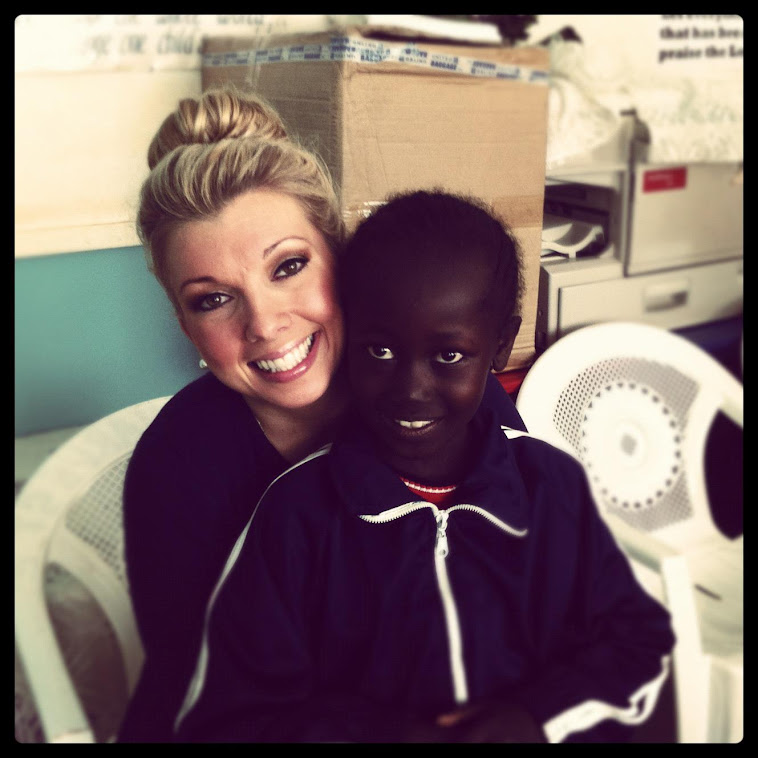
Ms. Serafin in Kenya

Ms. Serafin in Kenya