Friday, March 16, 2012

Weekend Homework - So sorry!

Hi yall,

Today we were not ready for our math test, so I made a better study guide then the one the kids had.  Pro:  I explained how to find every answer on the guide!!!  Andddd...your kids should get an A on the test if they understand this study guide.  Con:  they have weekend homework.  My apologies, but I just did not feel they were ready today.  In the event they lose it, here they are!

Green group:

Green Group SAMS Test Review
#3 Find the missing dimension: Remember:  LxW = Area and L + L + W + W = Perimeter
Ex:The area of a book is 18 square inches. Its height is 6 inches. What is its width?  _________
So 6 x ? = 18  3!  3 is the missing dimension!  Answer:  the width 3 inches
Your turn:  Find the missing dimensions!
The area of a book is 24 square inches.  Its height is 6 inches.  What is its width?  _____________
The area of a carpet is 63 square feet.  Its width is 9 feet.  What is the height?  _____________
The area of a garden is 32 square feet.  Its width is 8 feet.  What is the height?  _____________
Ex: The perimeter of a book is 18 inches.  Its height is 6 inches.  What is its width?  _________
I know the perimeter is 18 inches, so L + L + W + W = 18.  I know the height (length) is 6, so 6 + 6 = 12.  The other two sides have to add up to what is left.  18-12=6.   So W + W = 6  I will divide 6 between the 2 sides.  The width must be 3!  Answer:  the width 3 inches
Your turn:  Find the missing dimensions!
The perimeter of a book is 12 inches.  Its height is 2 inches.  What is its width?  _____________

The perimeter of a book is 38 inches.  Its height is 12 inches.  What is its width?  _____________

#5:  Elapsed time
To find elapsed time, you need to figure out what you need:  start time or end time.  Then to find out how much time has passed between the start and end, you can: 
·         Find hours first, then minutes.  Count up (Ex:  3:30 to 4:45 – 3:30-4:30 is 1 hour, then you need to add 15 minutes to get to 4:45.    
·         Subtract if there is no borrowing of minutes to hours:  the minutes number needs to be bigger.  (example:  The show ended at 6:47.  It started at 6:17.  How much time passed?  47-17=30 min.)
·         Use a clock to figure it out.
Your turn:  
·         How much time passed between 2:30 and 4:45?
·         How much time passed between 1:15 and 4:30?
·         Each show is 30 minutes.  The show ended at 10:30.  What time did it start?
·         Each show is 30 minutes.  The show ended at 12:45.  What time did it start?
#6 Determine if the scenario wants area or perimeter:
·         How much fencing is needed  ____________________
·         How much carpet is needed ____________________
·         How much paint is needed for a wall ____________________
·         How much border is needed to go around the top of the wall in a room ____________________
·         How much mulch is needed to cover a garden ____________________
·         How much tile is needed for a classroom ____________________
Key words:  Perimeter – around the outside, around the edge  Area:  cover something
#7 Formulas for finding Area and Perimeter
How do you find area?  Multiply the dimensions – length times width:  LxW = Area then Label with SQUARE UNITS!
If it is a square, that means that you multiply the side length times the same number.  SxS = area of a square then Label with SQUARE UNITS!
How do you find perimeter?  Add up all the sides.  L+L+W+W=perimeter .  If it is a square, add sides up.  Side+side+side+side = perimeter of a square  Label with the unit.
Your turn:  Find the area and perimeter of the following shapes.  Don’t forget labels!


Perimeter:  ____________
Area:______________


Perimeter:  ____________
Area:______________

Perimeter:  ____________
Area:______________


Perimeter:  ____________
Area:______________


#8  Measure these lines. Remember, a whole number can be the nearest ½ or ¼ inch.


To the nearest ½ inch:
__________
____________________
    To the nearest ¼ inch: ____________________________________
    ____________________________
To the nearest cm:
   ___________________________________
            ______________________________
To the nearest mm:
________________________
  ____


Which is bigger?  Circle the bigger measurement.


5 meters or 200 cm?
7,000 mm or 1 meter?
9 meters or 9 kilometers?
300 cm or 4 meters?
13 inches or 1 foot
2 feet or 20 inches
3 yards or 3 feet
4 yards or 10 feet


Conversions: (don’t forget labels!!)


How many meters are in 200 cm?  ___________
How many meters are in 3 kilometers?  _______         
How many feet are in 8 yards?  _________
How many feet are in 6 yards?  _________


Round the following metric measurements: 
789 cm = ______ m             6,134 mm = ______ m         314 cm = ________ m         67mm = _____cm


How long is the item?  Subtract the end point from the starting point.  Don’t forget to draw the lines!


Pink:  We crossed out some of their problems to decrease the work!!  #1 they had a hard time, so I did my best to very clearly write down how we discussed it!

Pink Group:  SAMS Unit Test Prep:  HOTS Perimeter and Area Practice
#1 Directions/Example:  Story problem for making a lay out of a garden, etc.  List all of the dimensions possible for a rectangle with the perimeter (♫perimeter is around…♫) of 24.  
This means L + L + W + W = 24   
                                                            Length  (remember, the longer side is the length)
                    Width                                                                   Width
                                                            Length
Next, to make it easier, let’s divide this in half. So, L + W = 12.  Now, we will find all the factors that add up to 12.  We could not have a dimension of 0, so start with 1.  To check, we add L+L+W+W = 24 


1+11 (Check:  1+1+11+11=24)
2+10 (Check:  2+2+10+10=24)
3+9 (Check:  3+3+9+9=24)
4+8 (Check:  4+4+8+8=24)
5+7 (Check:  5+5+7+7=24)
6+6 (Check:  6+6+6+6=24) 


Once we have listed all of the numbers that add up to 12 (half the perimeter, remember), we will now turn these into the dimensions of our rectangles. 


1X11 = area of 22, perimeter of 24
2X10= area of 20, perimeter of 24
3X9= area of 27, perimeter of 24
4X8= area of 32, perimeter of 24
5X7= area of 35, perimeter of 24
6X6= area of 36, perimeter of 24   


So the perimeter will remain the same, but the area of each will change.
Your turn: Find all of the possible layouts for a garden that will have a perimeter of 48 feet.


#2  Directions/Example:  Area:  List all the dimensions of a shape with an area of 24. 
To do this, you find all the factors that multiply to equal 24.  We always start with 1, and move up to 10. 
·         Every time, we start with 1, so 1 X 24
·         Does 2 divide in equally to 24? 24 is even, so yes! 2X12
·         Does 3 divide in equally to 24? Yes!  3x8
·         Does 3 divide in equally to 24? Yes!  4x6
·         5 is the only number left in the middle of 4 and 6, and it does NOT divide equally into 24.  So those are all the factor sets of 24! 
All of the dimensions of rectangles with an area of 24 are:  1x24, 2x12, 3x8, and 4x6
Here we observe that the area will stay the same, but the shape (dimensions) of the rectangle will change.  This relates area and perimeter again:  the area may stay the same, but perimeter will change. 
Your turn:  Find all of the rectangles with an area of 28. 


#3 Find the missing dimension: Remember:  LxW = Area and L + L + W + W = Perimeter
Ex:The area of a book is 18 square inches. Its height is 6 inches. What is its width?  _________
So 6 x ? = 18  3!  3 is the missing dimension!  Answer:  the width 3 inches
Your turn:  Find the missing dimensions!
The area of a book is 56 square inches.  Its height is 7 inches.  What is its width?  _____________

The area of a book is 22 square inches.  Its height is 11 inches.  What is its width?  _____________

The area of a carpet is 63 square feet.  Its width is 9 feet.  What is the height?  _____________

The area of a garden is 32 square feet.  Its width is 8 feet.  What is the height?  _____________

Ex: The perimeter of a book is 18 inches.  Its height is 6 inches.  What is its width?  _________
I know the perimeter is 18 inches, so L + L + W + W = 18.  I know the height (length) is 6, so 6 + 6 = 12.  The other two sides have to add up to what is left.  18-12=6.   So W + W = 6  I will divide 6 between the 2 sides.  The width must be 3!  Answer:  the width 3 inches
Your turn:  Find the missing dimensions!
The perimeter of a book is 12 inches.  Its height is 2 inches.  What is its width?  _____________

The perimeter of a book is 38 inches.  Its height is 12 inches.  What is its width?  _____________

The perimeter of a yard is 64 feet.  Its length is 14 inches.  What is its width?  _____________

The perimeter of a room is 48 feet.  The width of the room is 8 feet.  What is the length?  _________

#5:  Elapsed time
To find elapsed time, you need to figure out what you need:  start time or end time.  Then to find out how much time has passed between the start and end, you can: 
·         Find hours first, then minutes.  Count up (Ex:  3:30 to 4:45 – 3:30-4:30 is 1 hour, then you need to add 15 minutes to get to 4:45.    
·         Subtract if there is no borrowing of minutes to hours:  the minutes number needs to be bigger.  (example:  The show ended at 6:47.  It started at 6:17.  How much time passed?  47-17=30 min.)
·         Use a clock
Your turn:  
·         How much time passed between 2:30 and 4:45?
·         How much time passed between 1:15 and 4:30?
·         How much time passed between 11:30 and 1:00?
·         How much time passed between 10:00 and 1:45?
·         Each show is 30 minutes.  The show ended at 10:30.  What time did it start?
·         Each show is 30 minutes.  The show ended at 12:45.  What time did it start?
·         Each show is 60 minutes.  The show ended at 8:35.  What time did it start?


#6 Determine if the scenario wants area or perimeter:
·         How much fencing is needed  ____________________
·         How much carpet is needed ____________________
·         How much paint is needed for a wall ____________________
·         How much border is needed to go around the top of the wall in a room ____________________
·         How much mulch is needed to cover a garden ____________________
·         How much tile is needed for a classroom ____________________
·         How much barbed wire is needed to protect the property of a castle ____________________
Key words:  Perimeter – around the outside, around the edge  Area:  cover something
#7 Formulas for finding Area and Perimeter
How do you find area?  Multiply the dimensions – length times width:  LxW = Area then Label with SQUARE UNITS!
If it is a square, that means that you multiply the side length times the same number.  SxS = area of a square then Label with SQUARE UNITS!
How do you find perimeter?  Add up all the sides.  L+L+W+W=perimeter .  If it is a square, add sides up.  Side+side+side+side = perimeter of a square  Label with the unit.
Your turn:  Find the area and perimeter of the following shapes.  Don’t forget labels!


Perimeter:  ____________
Area:______________


Perimeter:  ____________
Area:______________


Perimeter:  ____________
Area:______________


Perimeter:  ____________
Area:______________


#8  Measure these lines. Remember, a whole number can be the nearest ½ or ¼ inch.


To the nearest ½ inch:
__________
____________________
To the nearest ¼ inch: ____________________________________
    ____________________________
To the nearest cm:
      _______________
___________________________________
To the nearest mm:
________________________________
________________________


How long is the item?  Subtract the end point from the starting point.  Don’t forget to draw the lines!
Which is bigger?  Circle the bigger measurement.


5 meters or 200 cm?
7,000 mm or 1 meter?
13 inches or 1 foot
2 feet or 20 inches
3 yards or 3 feet
4 yards or 10 feet


Conversions: (don’t forget labels!!)


How many meters are in 200 cm?  ___________
How many meters are in 3 kilometers?  _______         
How many feet are in 8 yards?  _________
How many feet are in 6 yards?  _________


Round the following metric measurements: 
789 cm = ______ m             6,134 mm = ______ m         314 cm = ________ m         67mm = _____cm

Thursday, March 15, 2012

3/15 HW and Fernbank Pics!!

  • ELA:  study for spelling and vocab tests.  Green will test on Fire on the Mountain - pink will not test on Pecos Bill till next week.
  • Math:  Study for test - review study guide, complete practice quiz
Supplies needed!

For our math unit on Monday, we need mini-marshmallows and toothpicks - we need a lot of them (each child will use about 30-40 toothpicks and 20-30 marshmallows.  :)

We also need hand soap, hand sanitizer, and clorox wipes.  (Sensing a theme??  :) and of course...EXPOS!  I did get a big pack yesterday, but the kids need to get some to last until the end of the year.

Also, if anyone is interested in sponsoring a pizza party, let me know!  We are in need of some tangible rewards to motivate us!  :)  YALL ROCK!!!

FERNBANK was pretty awesome!!! Check us out!


We all got to touch an indigo snake! It was SLIMY!!


Go Gators!!


Do the T-Rex!  I had to jump in and do it! 


Best photo of the day!!


Wednesday, March 14, 2012

Menchies Offer!

At Menchie’s we are getting ready to spring into spring with our $1 yogurt party. At eight of our local Atlanta stores we will hosting $1 frozen yogurt night on Friday March 16, 2012 at 6pm – 9pm. For $1 you can get up to 10 ounces of frozen yogurt and toppings a 77% savings. Come one Come all, Celebrate Spring!
This offer is available at Menchie’s locations at – Cumming Market Place, Hamilton Mill (Dacula), Medlock Bridge (Johns Creek), Toco Hills Promenade, Tuxedo Festival, Paces Ferry Plaza, Sandy Plains Centre, and  Towne Lake Square (Woodstock).
A little basic information –
We are self service and you pay by the ounce. You choose from our huge selection of flavors and toppings. All of our soft serve choices are non-fat or low-fat. Each day we have 14 flavors. Two of these are sorbets which are non dairy, we also have gluten free and sugar free options. All of our fruit is fresh and we have over a 75 different types of toppings on any given day.
Thank you in advance for any help that you may be able to provide. I have included a coupon to use in the next week in case you would like it. Make sure to “like” and follow our facebook pages (Menchie’s Store Name for example, Menchie’s Hamilton Mill) for daily specials and coupons. You never know what we will post. Thanks again!!!


Wed. 3/14 HW

  • ELA
    • Idioms practice - answer any 15
    • TAG:
      • Pink:  Pecos Bill comprehension questions
      • Green:  Head in the Clouds for Fire on the Mountain
    • Study spelling and vocabulary
  • Math:
    • Unit 6 review (20 questions)
  • Science:
    • Study - using the study guide posted yesterday
  • Please return Progress reports and verification forms!

Tuesday, March 13, 2012

Math study guides

Green:

Pink:

I have tried posting them three times.  :(  Sorry!

Homework 3/13

I am very sorry for not posting yesterday!!

Tuesday homework:

  • ELA: 
    • dictionary comprehension practice (16 questions total)
    • Study spelling and vocabulary
      • Cursive 5x's each are due Thursday morning so I can review before the test on Friday
  • Math:
    • Study guide
      • Green:  all
      • Pink:  1-10 (if you want to finish it, you can)
    • HOTS POW
  • Science: 
    • Study - test is Thursday now.  Sorry for the TWO moves, but I feel the kids will perform best in this way.
Magnets Study Guide

Vocabulary:
attract:   pull towards
magnetic: describes things that attract objects containing iron
magnet:  a metal object that attracts other metal objects
repel: to push away
electromagnet:  a magnet that can be turned on and off
generator:  a machine used to make electricity
Short Answer Questions:
1.      What kind of magnet can be turned on and off?  What would this kind of magnet be used for?
A:  an electromagnet.  It can be used for moving junkyard cars that do not work anymore or other very heavy, large metal objects.  It can also be used to sort metals from plastic and glass at the recycling center.

2.     Where do you find the poles on a horseshoe magnet?
A:  On the ends of the horseshoe.       
3.     What is needed to make electricity (like in a generator)?
A:  You need a magnet and a coil of wire

4.      Which poles of two bar magnets would be attracted to each other?
A:  north and south or south and north, but never south and south or north and north  (opposites attract!)
5.     What objects are attracted to magnets?
A:  iron, steel, nickel (*but not the coin-our coins have copper in them, which does not attract), cobalt

6.    What objects are NOT attracted to magnets:
A:  copper, tin, aluminum (soda cans), paper, wood, cotton, etc.  
7.     What must an object contain for it to be attracted to a magnet?

A:  iron or magnetite

8.    What materials do you need to make a temporary magnet? How do you make a temporary magnet?

A:  For an electromagnet/temporary magnet, you need three things:  a battery, a wire, an a metal object (a screw or a nail) for the current to flow through. 
First wrap the wire around the screw.  Next, run electricity through the battery by attaching one side of the wire to the – side of the battery, and the other side to the + side of the battery.  A current is running through the wire, and the screw becomes a temporary magnet.  When you disconnect one side of the wire (or both) the current stops. 

9.     Give an example of a mineral that is magnetic.

A:  magnetite, nickel, cobalt

10.  What are some uses for magnets?

A:  compass (uses the Earth’s magnetic field to locate North), holding papers on the classroom white and blackboards or on your refrigerator, moving broken cars in junkyards, sorting large amounts of recycling, making a generator to use in a power outage, nametags for adult’s work badges, in the garage for holding up tools, etc. 

11.   Give three examples of shapes that magnets come in.
A:  bar magnet, horseshoe magnet, round magnets that we use on the board/fridge

12.  Explain how a compass works
A:  There is a bar magnet in the compass that spins, so that the north pole of the magnet points to the Earth’s north pole.


Math:  Green group:

Monday, March 12, 2012

Spelling/Vocab

Pink group: 
Pecos Bill

Spelling Words                 

table
final
handle
personal
animal
usual
jungle
actual
example
bottle
possible
single
several
national
hospital
trouble
candle
dial
equal
jingle


Vocabulary Words

polecat – a brown to black European flesh-eating mammal related to the weasels

mesquite – a thorny deep-rooted tree or shrub of the southwestern U.S. and Mexico that belongs to the legume family, produces pods rich in sugar, and is important as food for livestock; also : the wood of the mesquite used especially in grilling food

saddlebags – one of a pair of covered pouches laid across the back of a horse behind the saddle or hanging over the rear wheel of a bicycle or motorcycle

puny – slight or lesser in power, size, or importance

homestead – a home and surrounding land

dangle – to hang loosely especially with a swinging motion

curious - eager to learn

Green group:
The Fire on the Mountain

Spelling

pulled
begged
hugged
silly
correct
latter
matter
supper
common
lesson
collect
setting
bottles
different
jelly


Vocabulary

conditions – something that must exist for something else to happen

fulfill – to do what is necessary to carry out a request or command

ordeal – a very difficult experience

merchant – somebody who buys and sells goods

plateau – an area of high ground with a fairly level surface

till – to prepare land for the growing of crops

wisdom – good sense shown in a way of thinking, judgment, or action


Thursday, March 8, 2012

3/8 HW

Weekend Homework:  Study for Science Test!
  • Review science:  reread lessons 1 and 2 in the textbook
  • Go over the study guide  (try to answer the questions together)
  • Review vocabulary 
In the event your child forgot his/her book, here is online access: 
Online Textbooks
·        Science
Click Science and Health
Click HSP Science
State: Georgia
District: Fulton Co. School District  (Do not use the clusters that are listed for Fulton Co.)
School: Medlock
Username: mustangscience
Password: 123456


Name: ______________________________

Magnets
Study Guide


Vocabulary:

attract:____________________________________________________________________________________________________________
magnetic:___________________________________________________________________________________________________________
magnet:____________________________________________________________________________________________________________
repel:______________________________________________________________________________________________________________
electromagnet:_______________________________________________________________________________________________________
generator:__________________________________________________________________________________________________________


What kind of magnet can be turned on and off?  What would this kind of magnet be used for?


Where do you find the poles on a horseshoe magnet?


What is needed to make electricity?


Which poles of two bar magnets would be attracted to each other?


Know what objects are attracted to a magnet and what is not.
What must an object contain for it to be attracted to a magnet?


What materials do you need to make a temporary magnet? How do you make a temporary magnet?


Give an example of a mineral that is magnetic.


What are some uses for magnets?


Wednesday, March 7, 2012

HW 3/7

Inference page f/b

math pg 108 f/b

study science vocab

Math notes

Converting in the Metric System
·       The metric system is based on BASE TEN units.
·       Conversions
o   1 meter = 1000 millimeters
§  Millimeters are the smallest metric unit
o   1 meter = 100 centimeters
§  Cent (Root word) means 100.  Think 100 cents in a dollar, 100 years in a century
o   1 kilometer = 1,000 meters
§  Kilo means 1,000
§  It’s the biggest metric unit
·       How to convert:  BIG TO SMALL-Multiply them all!!!
Small to Big, Divide that pig!!!
·       **BIGGER unit to SMALLER unit = MULTIPLY** (move the decimal to the RIGHT)
o   Meters to CM:  multiply x 100
§  From a bigger unit to a smaller unit, the number will get a lot bigger!
§  5 meters = 500 cm
o   Meters to MM:  multiply x 1,000
§  5 meters = 5,000 mm
o   Kilometers to Meters:  multiply x 1,000
·       **SMALLER unit to BIGGER unit = DIVIDE (move the decimal place to the LEFT)
·       CM to M:  divide by 100
o   700 cm = ?  M
§  700cm ÷ 100 = 7 meters
·       MM to M:  divide by 1000
o   16,000mm = ? M
§  16,000 ÷ 1,000 = 16 Meters
·       M to KM:  Divide by 1000
o   84,000 Meters = ? KM
§  84,000 ÷ 1,000 = 84 KM

Food drive results

We collected 115 items for the Atlanta Community Food Bank!!!

(ugh, someone tech savvy teach me how to rotate on blogspot please!!!)

Tuesday, March 6, 2012

Tues. 3/6

  • No ELA - please enjoy the weather and exercise!
  • Math:  HOTS POW and perimeter page f/b - draw each picture
  • Science - begin studying magnet flashcards - test is Tuesday!
  • Lunch form for field trip!

Monday, March 5, 2012

Monday 3/5 HW

There is no green group story this week - third grade is "catching up" due to all the checkpoints testing and schedule irregularities.  Fourth grade, we are finishing Dear Mr. Henshaw this week. 

There is no spelling this week either.

HW:
ELA:  drawing conclusions page
Math:  perimeter page 109 f/b and HOTS POW
Field trip form-there are still a few not turned in, plus we need two chaperones!

Friday, March 2, 2012

Friday 3/2 homework

Field trip forms are due on Monday!

Crazy for Science Experiments!

It has been so awesome to be able to have so much hands-on experiment time in science.  We have done THREE labs!!

First we experimented with sink water, ice water, and almost boiling water from a kettle.  We also added the hot and cold water to the others and hypothesized the temperatures, changes, etc.  We also compared the units to measure temperature. 


Next, we began the lesson on conduction and the movement of thermal energy by making rice crispy treats in the classroom.  We had good and bad conductors to use (the metal pot, the wood spoon), as well as observed the thermal energy moving from the hot plate burner to the pan to the food items.  Our results were delicious and we were very grateful for the supplies being sent in!


Today we had our presentation with Georgia Power and completed 4 different experiments relating to insulators.  It was awesome!  There was phenomenal iPad technology integration (if anyone wants to sponsor the connector cord for the projector to iPad, that would be AMAZING!!!!!), hands on learning, styluses with heat sensors, etc.  The kids also got some awesome goodies!  They received "magic pencils" that are heat sensitive as well as cups that also change color with heat change, and a removable sticker to post to remember to shut the lights off in the room when you leave! 

Thursday, March 1, 2012

Thursday 3/1 hw

  • ELA:
    • finish nonfiction text features practices packet
    • study spelling!!!
  • Math
    • HOTS POW due
    • green:  125 and 135 front only
    • pink:  practice page (front only)
  • science
    • study!  they have a study guide with and without answers
    • There will be a vocab quiz and test - 70% of the test is vocab, hence why we have been studying the words all week
  • Field trip forms!  Only 8 have been turned in so far.

Online Textbooks Reminder

ONLINE TEXTBOOKS
As in the past, your child has access to the math, science, and social studies textbooks online.

Math                                                                           Social Studies
Website:  http://www.pearsonsuccessnet.com/                     Website:  www.eduplace.com\eservices
Username:  medlockbridge3                                       Username: grade3ourdemocracy
Password:  123456                                                      Password:  123456

·         Click Science and Health
·         Click HSP Science
·         State: Georgia
·         District: Fulton Co. School District  (Do not use the clusters that are listed for Fulton Co.)
·         School: Medlock Bridge Elementary
Username: mustangscience
Password: 123456
·         Click on My Library
·         Click on book icon

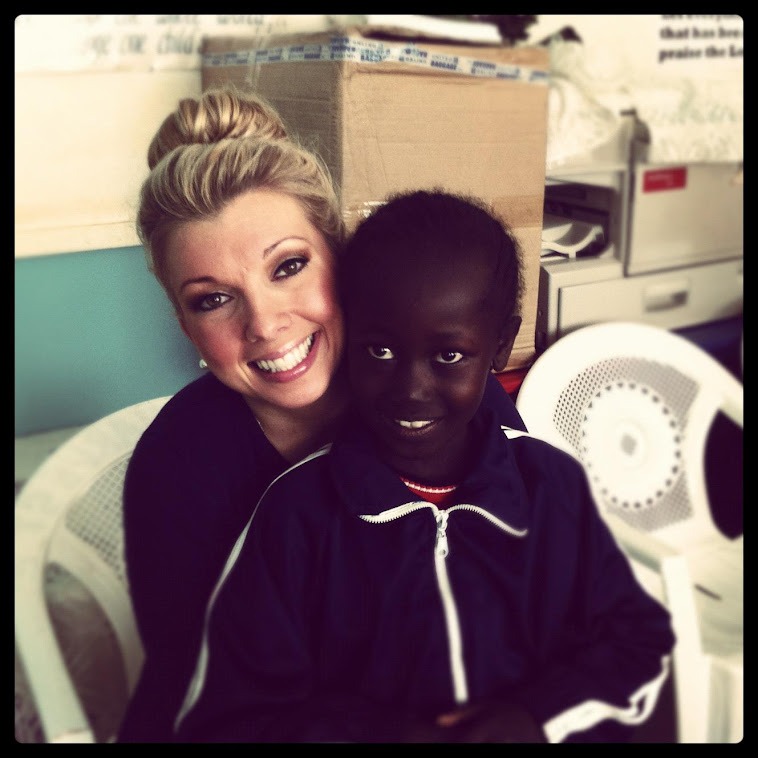
Ms. Serafin in Kenya

Ms. Serafin in Kenya